

The moment your dog returns from a board and train program, the real work begins — inside your home. Knowing what to expect after board and train graduation helps you build on the progress your dog has already made and turn those new skills into lasting habits that hold up in real-world situations.
Ready to give your dog a structured start at home? Explore our premium board and train programs for busy Northern California families.
What to expect after board and train graduation follows a predictable arc: three days of decompression as your dog adjusts to your home, three weeks of learning your household routine, and three months of full integration. During this period your dog needs consistent reinforcement of the skills they learned at the trainer’s home. Owner coaching sessions, daily practice with duration-distance-distraction, and patience through the testing phase are the keys to lasting results.
Many owners worry that their dog will immediately revert to old habits when they leave the structured training environment. With the right approach, the transition becomes a smooth continuation of the work already started. Understanding each phase of the adjustment period prepares you to support your dog through it.
What Happens During the First Week Home
The first week focuses on decompression. Keep your home environment calm, stick to a consistent daily schedule, and expect your dog to test old boundaries. This is not regression — it is your dog learning that the same rules apply in your home. Many owners mistake testing boundaries for regression, when it’s actually part of the normal learning process. The American Kennel Club emphasizes that a slow transition period helps dogs build confidence in their new surroundings.
The 3-3-3 rule sets realistic expectations for this adjustment period. Your dog needs roughly three days to decompress, three weeks to learn your daily routine, and three months to feel completely at home. During the first three days, your dog may seem confused or anxious. They are adjusting from the trainer’s structured environment to a completely new set of sights, sounds, and smells. The routine that felt familiar at the training facility now needs to be rebuilt in your home with you as the handler.
To support a smooth transition during this initial phase:
- Keep the house quiet and avoid hosting visitors during the first 48 hours.
- Maintain the same meal times, walk schedule, and potty breaks the trainer established.
- Use the same verbal cues and hand signals your dog learned in the program.
- Limit access to the whole house at first — start with one or two rooms before expanding.
- Keep a log of any behaviors that seem to slip so you can address them intentionally.
Your dog may test specific rules they previously followed perfectly at the trainer’s home. A dog that never jumped on furniture at the training facility may try it at your house. This is not defiance — it is a question. Your dog is asking whether the same rules apply here. Your answer must be the same as the trainer’s. Consistency during these early days is what tells your dog that the rules did not change when they came home.
How to Transfer Training Results to Your Home
Dogs do not automatically generalize skills across environments. A reliable “sit” at the trainer’s house may fail in your living room or at a busy park. You must practice each command in new locations with gradually increasing difficulty. At Medina Dogs Training, we coach owners through this transfer of training results to ensure the skills your dog learned hold up in real-world conditions throughout the East Bay and Silicon Valley.
The key concept here is generalization. A dog that performs perfectly in the trainer’s home environment has learned to associate those cues with that specific location. Your job is to prove that “sit” means the same thing in the kitchen, on a sidewalk, and at a crowded park. The three factors that influence every command are duration, distance, and distraction. Work on one factor at a time:
- Start with duration — ask for a stay and gradually increase the time from five seconds to thirty seconds to two minutes.
- Add distance — step one foot away, then three, then ten, while your dog holds the stay.
- Introduce mild distractions — a toy on the floor, a family member walking by, then outdoor environments with other dogs and people.
This progressive approach builds reliability in the real-world settings where it matters most. If your dog struggles at any step, dial back the difficulty and build up again. Our guide on board and train results at home covers this process in more detail, including timelines for each phase of generalization.
What Kind of Owner Coaching Does Medina Dogs Training Provide?
Medina Dogs Training provides owner coaching sessions as a core part of every board and train program. These sessions teach you the exact cues, schedules, and management strategies your dog learned during their stay. You practice alongside your trainer during the transition, giving you the confidence to maintain the training results long after graduation.
The biggest predictor of long-term success isn’t what your dog learned during training—it’s how consistently the family continues that training at home. Without coaching, many owners unintentionally allow their dog to slip back into old habits. A dog that walked calmly on a loose leash at the trainer’s home may quickly learn that pulling is allowed again if the owner does not enforce the same standard. Our owner coaching sessions bridge that gap by ensuring the handler understands the system, not just the dog.
During these sessions, you will learn:
- The specific leash-walking protocol your dog knows and how to use it consistently on neighborhood walks.
- How to structure meal times to reinforce calm behavior and impulse control around food.
- Management strategies for common challenges like door dashing and jumping on guests.
- How to read your dog’s body language and reward correct choices in real time.
- How to set up your home environment to set your dog up for success during the transition.
We also provide a structured daily schedule that balances exercise, mental stimulation, and rest. Following this schedule during the transition period prevents the small regressions that happen when owners are inconsistent with timing and expectations. Our coaching model involves double the industry standard for follow-up sessions because we know that owner education is the single biggest predictor of long-term training success. For more on our approach, read about how board and train programs create lasting behavior change.
How Long Does the Adjustment Period Last?
The full adjustment period takes approximately three months. Dogs typically start settling into their home routine within three weeks and feel fully at ease by three months. However, each dog adjusts at their own pace based on their temperament, age, and the consistency of your follow-through.
During the first few weeks, you may notice your dog testing boundaries that the trainer had already addressed. This is not your dog forgetting — it is your dog checking whether the rules changed when they came home. Responding with the same cues and consequences the trainer used is essential. If your dog successfully jumps on the counter once without a consequence, that behavior is now reinforced in your home. Consistency during these early weeks determines whether the training sticks.
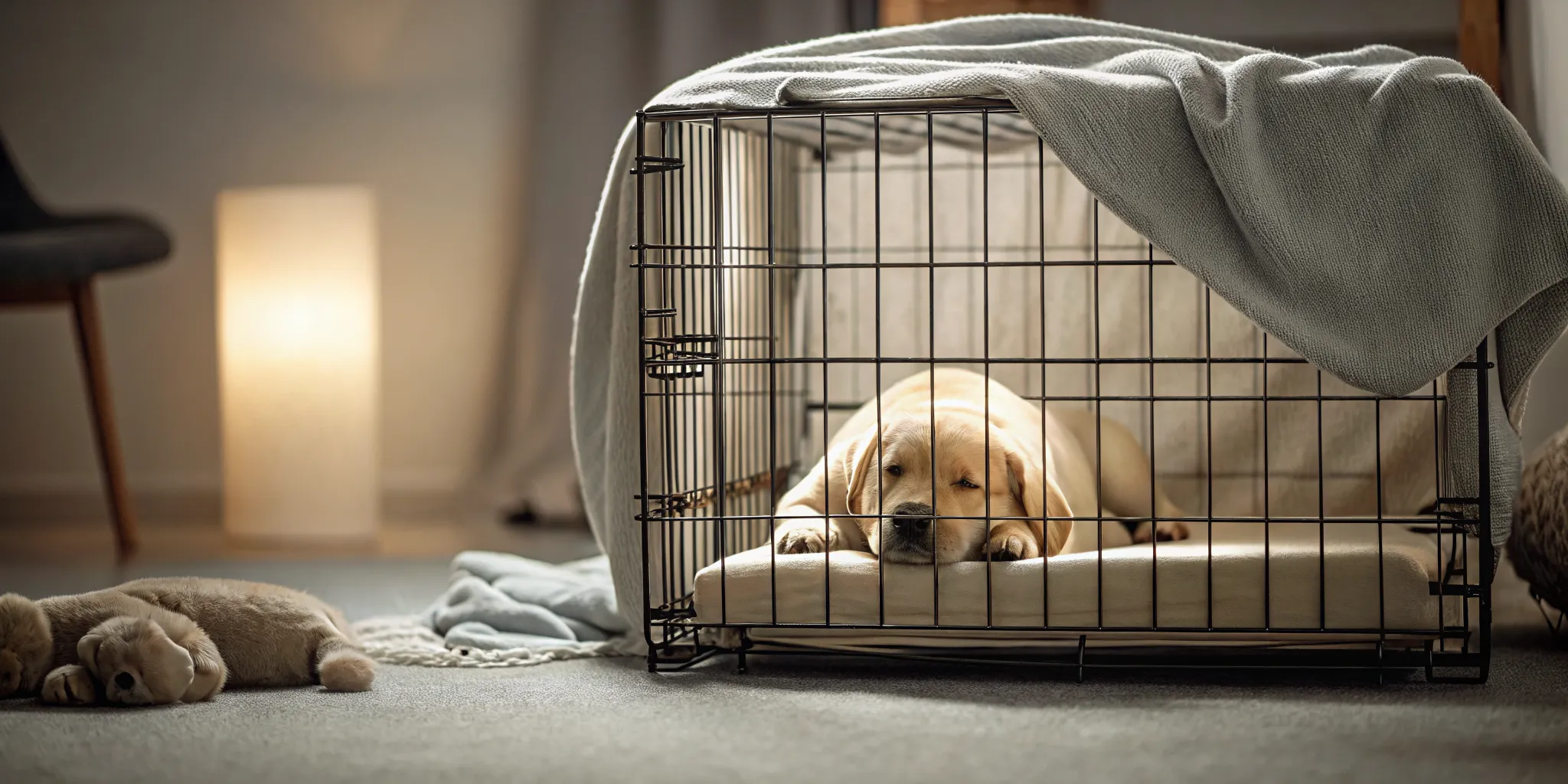
Some behaviors settle faster than others. A dog that learned a reliable crate routine at the training facility may adapt to your home’s crate placement within a few nights. Loose-leash walking in busy environments, by contrast, may take several weeks of consistent practice before it becomes automatic. The key is to treat each behavior independently and not assume that progress in one area means the dog is fully adjusted in all areas.
When to Reach Out for Follow-Up Support
Medina Dogs Training offers follow-up support to alumni families. If your dog is struggling with a specific behavior three weeks into the transition, or if you are unsure how to handle a new situation, reach out for guidance. Early intervention prevents small issues from becoming entrenched habits.
Some behaviors naturally take longer to solidify than others. Loose-leash walking in high-distraction environments may take several weeks of consistent practice, while a solid crate routine may fall into place within days. The behaviors that do not improve with consistent application of the training protocol are the ones that may need a follow-up session or a behavior modification refresher.
Our training programs page outlines the support options available to families in the East Bay, Silicon Valley, and Sacramento areas. If you are unsure whether a specific behavior warrants a follow-up, a good rule of thumb is to give it one week of consistent application. If the behavior has not improved or has gotten worse, schedule a session. For dogs that need a different approach, our behavior modification program addresses more complex challenges that go beyond what a standard board and train covers.
Frequently Asked Questions
How long does it take for a dog to adjust after board and train?
Most dogs go through a three-day decompression period, begin settling into the home routine within three weeks, and feel fully adjusted within three months. This timeline varies based on the dog’s temperament, age, and how consistently the owner applies the training protocols.
Will my dog forget everything after board and train?
No. Your dog retains the skills they learned. However, dogs do not automatically generalize behavior across environments. You need to practice cues in your home, on walks, and in different settings so your dog learns that the same rules apply everywhere.
What happens during owner coaching sessions?
Owner coaching sessions teach you the exact cues, schedules, and management strategies your dog learned during the program. You practice alongside your trainer so you can confidently reinforce the training at home.
What should I do if my dog regresses after coming home?
Regression is usually a testing phase where your dog checks whether the rules changed. Stay consistent with the same cues and consequences the trainer used. If the behavior does not improve within a few weeks, contact Medina Dogs Training for follow-up support.
Do you offer follow-up support after the program ends?
Yes. Medina Dogs Training offers follow-up support to alumni families in the East Bay, Silicon Valley, and Sacramento areas. If your dog is struggling with a specific behavior, reach out for guidance before the issue becomes a habit.
Ready to Start Your Dog’s Training Journey?
Knowing what to expect after board and train graduation is the first step toward making your investment in training pay off for years to come. A well-structured board and train program gives your dog strong foundational skills, but your consistency during the transition determines whether those skills become permanent habits. At Medina Dogs Training, we do not hand you the leash and walk away. Our owner coaching and follow-up support ensure you have the knowledge and confidence to maintain the results your dog has already achieved. Families throughout the East Bay, Silicon Valley, and Sacramento area trust our double-industry-standard coaching model because it delivers real, lasting results. Take the next step today and give your dog the consistent support they need to thrive in your home.
Call (510) 576-5922 to schedule your free consultation with Medina Dogs Training.

Tim Medina is the founder and Training Director of Medina Dogs Training, specializing in real-world obedience and behavior modification for dogs of all ages and temperaments. With more than 14 years of hands-on dog training experience, Tim brings a rare combination of practical training expertise and executive-level leadership, delivering structured, results-driven programs designed for real-world reliability.
He helps dog owners solve serious behavior challenges including aggression, reactivity, leash pulling, and lack of recall through structured, results-driven board-and-train programs. Tim also serves as a Advanced Nose Work instructor at the Marin Humane Society, bringing institutional credibility and community trust to his work.
Tim works with clients in Fremont, Stockton, Sacramento, and surrounding Northern California areas, including the East Bay, Silicon Valley, and the greater San Jose region.

