

A chaotic greeting at the front door turns a quiet evening into a stressful battle for control. For busy East Bay families, managing a high-energy dog requires a reliable way to switch off the excitement. If you want to build a calmer home, learn how to teach the place command with our proven board-and-train methods today.
Learning how to teach place command to a dog gives you a way to build structured calmness in your home. This boundary command tells your dog to go to a raised surface, mat, or bed and stay until you release them. By linking the target area with rewards, you give a high-energy dog a clear outlet for calm behavior. The training stops jumping when guests visit and keeps your dog safe during family meals.
Once you understand this simple tool. The next step is to explore exactly how to teach place command to a dog and what the process looks like in your daily routine.
How to Teach Place Command to a Dog: What Is the Place Command?
The place command teaches a dog to go to a specific mat or bed and stay there until released. It gives your dog a clear job during busy moments, reducing jumping, crowding, and door-dashing. This command helps create calm routines in homes with active or anxious dogs.
The place command is a key tool that brings calm to your home. With this cue, a dog learns to go to a set mat or bed and stay there until you say they can leave. This command helps you manage your dog when guests come over or during busy family times. It is a simple way to build good habits and help your dog feel secure. Many owners in the Bay Area find this command essential for managing energetic dogs in active households where structure helps everyone coexist peacefully.
The Role of a Safe Spot
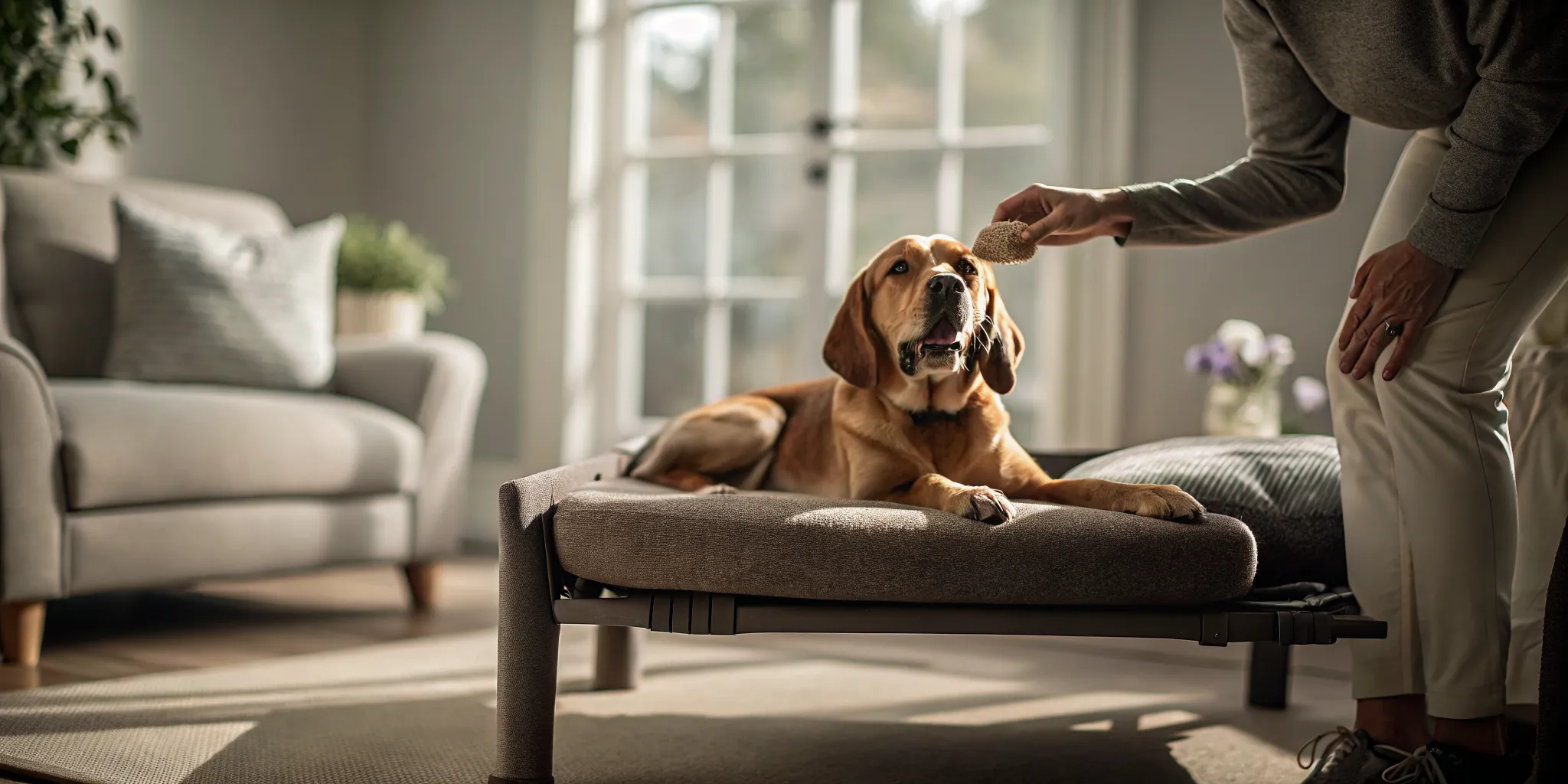
Sending your dog to a set spot keeps them from running underfoot when kids play or when guests arrive. This structured approach prevents common problem behaviors like jumping on visitors or crowding around food. A raised cot works best because it has clear borders that your dog can feel under their paws. This spot must be distinct from the rest of the floor so your dog knows where it ends. Choose a location that is away from high-traffic areas but still lets your dog see the family. Never use this place as a way to punish your dog, as it must stay a happy zone of safety where they feel comfortable and relaxed.
Choosing Your Cue Word
Pick a short, clear word to start this skill, such as “place” or “bed.” Be sure that each person in your home uses the same word. Consistency across family members prevents confusion and speeds up the learning process. If you use the same term each time, your dog will learn much faster. Do not change your cue once you start, as staying steady is the key to success. Keep the word positive and neutral so your dog associates it with good things.
What Are the Steps to Teach the Place Command?
Teaching place involves luring your dog onto a mat, marking the behavior with a reward, adding a verbal cue, and practicing in short sessions. The key phases are choosing a mat, luring with treats, marking success, adding the cue word, using a release word, and repeating often across multiple short sessions.
Teaching the place command to a dog is a great way to build focus and help them stay calm when needed. You can teach this skill with a mix of luring and shaping, which means you reward small steps toward the final goal. The best part is that this training does not require expensive equipment or professional lessons. Any owner can learn how to teach place command to a dog with patience and the right approach.
Six Steps to Teach Place
- Pick a mat or bed. Choose a special mat or cot. Use it only for this training so your dog recognizes it as their专属spot.
- Lure your dog. Hold a tasty treat in your hand. Let your dog sniff it, then slowly move your hand over the mat. The goal is to get all four paws on the surface.
- Mark and reward. As soon as your dog has all four paws on the mat, say a marker word like “Yes” and give them the treat right away. Timing matters here.
- Add the verbal cue. Once your dog steps onto the mat easily, say “Place” right before you lure them onto the mat. Soon they will respond to the word alone.
- Use a release word. Your dog must stay until you give a clear release word like “Free” or “Break.” This teaches them that the stay has a defined endpoint.
- Practice often. Keep sessions short and fun so your dog loves to go to their place. Consistency across multiple short sessions builds the strongest results.
Practice and Session Tips
Keep your practice sessions short, aiming for three to five minutes at a time, twice a day. Short, frequent sessions prevent your dog from getting tired and keep training fun. Always end each session on a positive note. If your dog does a step well, reward them, say your release word, and stop. This leaves them wanting more for the next session. Over time, these small investments add up to a reliable, well-trained dog that knows how to settle on command.
How Long Should a Dog Stay in Place?
A dog should stay in place until you give a clear release cue, starting with just two to five seconds during early training. You can slowly build this stay over several weeks up to thirty minutes to help your dog settle at home. The key is gradual duration increases paired with a consistent release word.
Short Intervals for Beginners
Build the duration slowly by starting with very short stays before you give the release cue. Reward your dog after just a few seconds at first. This helps them build a strong connection to the bed as a rewarding place to be. Do not expect your pet to stay long on day one. Keep your first sessions under five minutes to keep training fun. If your dog gets up early, simply reset and try again with a shorter duration.
The Role of a Release Cue
Your dog must know when their job is done. A clear release word tells them they can step off the mat. Choose a short word you do not use in everyday talk. Like “Free” or “Break.” Say the word in a happy tone so your dog feels good about leaving the mat. If they get up early, calmly guide them back without scolding. The release cue transforms the stay from an open-ended wait into a clear, achievable task.
Adding Distance and Time
Do not move away too fast when you practice. Build stay time near the mat before you add distance. Once your dog can stay for a few minutes while you stand near them, take one step back. If your dog breaks their stay, go back to a closer distance where they can succeed. This stepwise approach prevents confusion and builds confidence. Over several weeks of consistent practice, you can work up to a thirty-minute stay even with you in another room.
What Are Common Place Command Mistakes to Avoid?
The most common mistakes in place training include adding distance too quickly, using the command in anger, inconsistent release cues, adding distractions too early, and skipping generalization. Each mistake slows progress and confuses the dog. A steady, reward-based approach prevents these errors.
Rushing Distance and Distractions
A common mistake is rushing to add hard steps too fast. Do not ask your dog to stay when you walk away until they can hold the place while you stand near them. Only add noise and movement once your dog does well in a quiet room. If you add hard steps too early, your dog will get confused and may stop responding to the cue entirely. Patience during the early stages prevents the need to retrain later.
Poisoning the Command with Frustration
A second error is using the place command when you are angry. If you shout the word, the mat becomes a scary zone instead of a safe space. This will ruin the command for your dog. Always stay calm and keep sessions short and fun. Reward your dog with treats and praise when they do the job right. The mat should be one of your dog’s favorite places in the house, not somewhere they fear being sent.
Weak Release Cues and Broken Stays
If your dog leaves the mat before you release them, calmly lead them back. Give a quick reward when they stay. You must also use a clear release word every time. A consistent release cue helps your dog feel happy when they are free. Inconsistent release cues are one of the fastest ways to undermine your training progress, because the dog never knows when the stay is supposed to end.
| Mistake | Why It Hurts Training | Better Approach |
|---|---|---|
| Adding distance too fast | Dog breaks stay and gets confused. | Master duration first, then add one step at a time. |
| Using place in anger | Mat becomes negative and dog avoids it. | Stay calm, keep sessions short and positive. |
| Inconsistent release cue | Dog does not know when to leave. | Use the same word like “Free” every time. |
| Adding distractions too early | Dog cannot focus and fails repeatedly. | Only add noise after success in quiet rooms. |
| Not practicing in new rooms | Dog thinks place only works in one spot. | Practice in different rooms and locations. |
How to Use the Place Command in Real Life
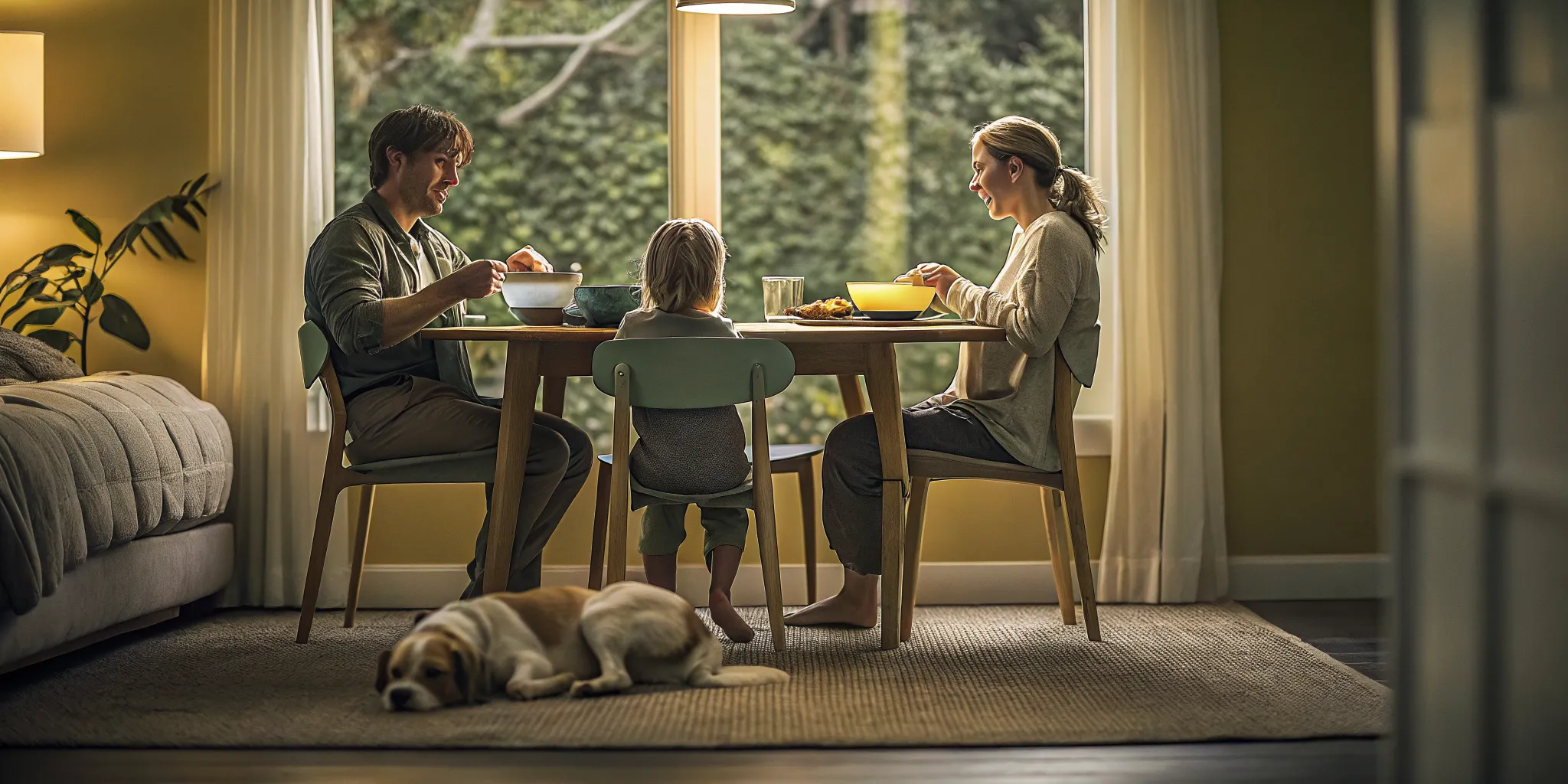
The place command works in many daily situations: during meals to prevent begging, when guests arrive to stop door-dashing. For anxious dogs who need a structured safe spot, and for active dogs who need help settling down. Practice in different rooms so your dog applies the skill everywhere.
Managing Guests and Mealtime Chaos
Dinner time should be a calm, quiet time for your home. If your dog begs for food or crowds the table, this command is a lifesaver. You can tell your dog to stay on their mat while you prepare food or focus on tasks. This keeps your pet safe from hot stoves or dropped foods. This tool also helps you manage your dog when guests visit your East Bay home. Instead of letting them run to the door or jump on friends, you can guide them to their bed. Your guests will appreciate a calm greeting, and your dog will feel proud of a job well done.
Helping Anxious or Active Dogs
For an anxious dog, a busy home can feel scary. Using the place command can help reduce anxiety by providing a structured space where your dog knows exactly what to do. When your dog knows their job, they can settle down instead of worrying about the room. This tool is also great for active dogs with high energy. It gives them a clear way to stay calm when the house gets busy. Many owners find that consistent place training leads to better behavior overall, not just when the mat is out.
Practicing in Different Rooms
You should teach this command in other rooms and spots of your home. This helps your dog learn that the command applies everywhere, not just in the room where you started training. If you only practice in the living room, your dog may not respond when you ask them to go to their place in the kitchen or bedroom. The place command can also be a stepping stone for improving impulse control during daily walks.
Frequently Asked Questions
What equipment do I need to teach the place command?
You need a distinct bed, mat, or cot that feels different from your normal floor. Raised cots with clear edges work best because dogs can feel the boundary under their paws. You also need high-value treats to reward your dog and a standard leash to guide them during early training.
Why is consistency important when teaching the place command?
Consistency helps your dog understand exactly when the task starts and ends. Use the same cue word every time. Use the same release word every time. When every family member follows the same rules, your dog will learn faster and retain the skill longer.
How do you add distance in place training?
Only add distance after your dog can stay on their mat for a few minutes. Point to the bed, say the word, and take one step back. If your dog stays, mark the moment, step back to them, and reward them before giving the release cue. Increase distance gradually over multiple sessions.
Does training commands prevent behavior issues?
Yes. Teaching basic commands builds a strong bond and helps prevent common behavior problems. Training helps manage these issues, which is vital because behavior problems are the most common reason owners choose to give up their pets. Structured commands like place give your dog a clear job to do in any situation.
Ready to bring lasting calm to your household?
Delaying structured obedience training allows frustrating daily behaviors to become more deeply ingrained. Without a clear plan, simple activities like welcoming guests or enjoying meals at home can remain stressful. If you are in the East Bay or Sacramento area, a professional board-and-train program can help your dog build reliable place skills and calm habits quickly.
Ready to build better habits? Call (510) 576-5922 to schedule a free consultation with Medina Dogs Training today.

Tim Medina is the founder and Training Director of Medina Dogs Training, specializing in real-world obedience and behavior modification for dogs of all ages and temperaments. With more than 14 years of hands-on dog training experience, Tim brings a rare combination of practical training expertise and executive-level leadership, delivering structured, results-driven programs designed for real-world reliability.
He helps dog owners solve serious behavior challenges including aggression, reactivity, leash pulling, and lack of recall through structured, results-driven board-and-train programs. Tim also serves as a Advanced Nose Work instructor at the Marin Humane Society, bringing institutional credibility and community trust to his work.
Tim works with clients in Fremont, Stockton, Sacramento, and surrounding Northern California areas, including the East Bay, Silicon Valley, and the greater San Jose region.

