

Sleepless nights with a crying puppy can quickly leave new owners exhausted. Learning how to crate train a puppy at night creates a calm, predictable bedtime routine that helps your puppy settle faster and lets everyone get a better night’s sleep.
Ready to fast-track your puppy’s crate training? Explore our premium puppy board and train programs today.
How to crate train a puppy at night requires structure, safety, and patience. Place the crate in your bedroom and fill it with cozy bedding. The American Kennel Club suggests a crate should be a safe haven for sleep. Limit food and water two hours before bedtime to stop overnight potty breaks, and wait for quiet moments before letting your pup out. Sticking to a consistent schedule helps your puppy settle quickly and ensures everyone in your Northern California home gets a restful night.
Many new owners wonder how long it takes for a puppy to adjust to their new surroundings. Most find success when following a clear, structured evening plan. The first step is establishing a consistent bedtime routine.
Establishing a Consistent Bedtime Routine
Young dogs rely on predictable structure to feel secure. Setting up a nightly routine is the foundation of learning how to crate train a puppy at night. When your puppy knows what to expect, bedtime anxiety drops, transforming the crate into a peaceful sanctuary.
An effective bedtime routine begins hours before you close the crate door. From their final meal to the last outdoor walk, every step plays a role in preparing your pup for sleep. During the first 30 days of training, this consistency prevents behavioral issues.
Managing Food and Water
Proper timing is essential for a dry, comfortable bed.Remove food and water about two hours before bedtime to reduce overnight potty trips while still making sure your puppy stays well hydrated during the day. Because young puppies have limited bladder capacity, this preventative step is crucial for overnight success, preventing digestive discomfort.
The Final Potty Trip
Take your puppy out for one last potty trip immediately before placing them in the crate, ensuring they start the night with an empty bladder. Keep this final trip quiet, calm, and strictly focused on business. Use a soft, quiet voice and keep the leash short. Once they finish, guide them back indoors without any fuss. Standard crate training a puppy techniques emphasize that the crate should represent a peaceful den.
Setting the Right Bedtime Mood
As bedtime approaches, let your home reflect that the day is winding down. Dim the lights and lower the volume on the television. This environmental shift naturally lowers your puppy’s heart rate and prepares their brain for rest. A quiet home environment is key to a calm, sleepy puppy.
- Establish a set bedtime and stick to it strictly every night to build a strong biological habit.
- Remove food and water bowls two hours before bedtime to prevent midnight bladder pressure.
- Lower household lights and minimize noise to signal that the day has ended.
- Lead your puppy to their outdoor potty spot for one final, low-key elimination opportunity.
- Guide them to the crate with a gentle cue word and a small, high-value treat to reinforce positive associations.
Where is the Best Place to Put the Crate at Night?
The optimal location for your puppy’s crate at night is in your bedroom. Keeping the crate nearby provides essential emotional security for a young pup, reduces separation anxiety. And ensures you can easily hear them when they need a legitimate midnight potty trip.
Choosing where to place your puppy’s crate is a key decision in crate training a puppy. The location impacts how secure your puppy feels and how quickly they settle, making the first 30 days of training significantly smoother.
Keep the Crate Close in Your Bedroom
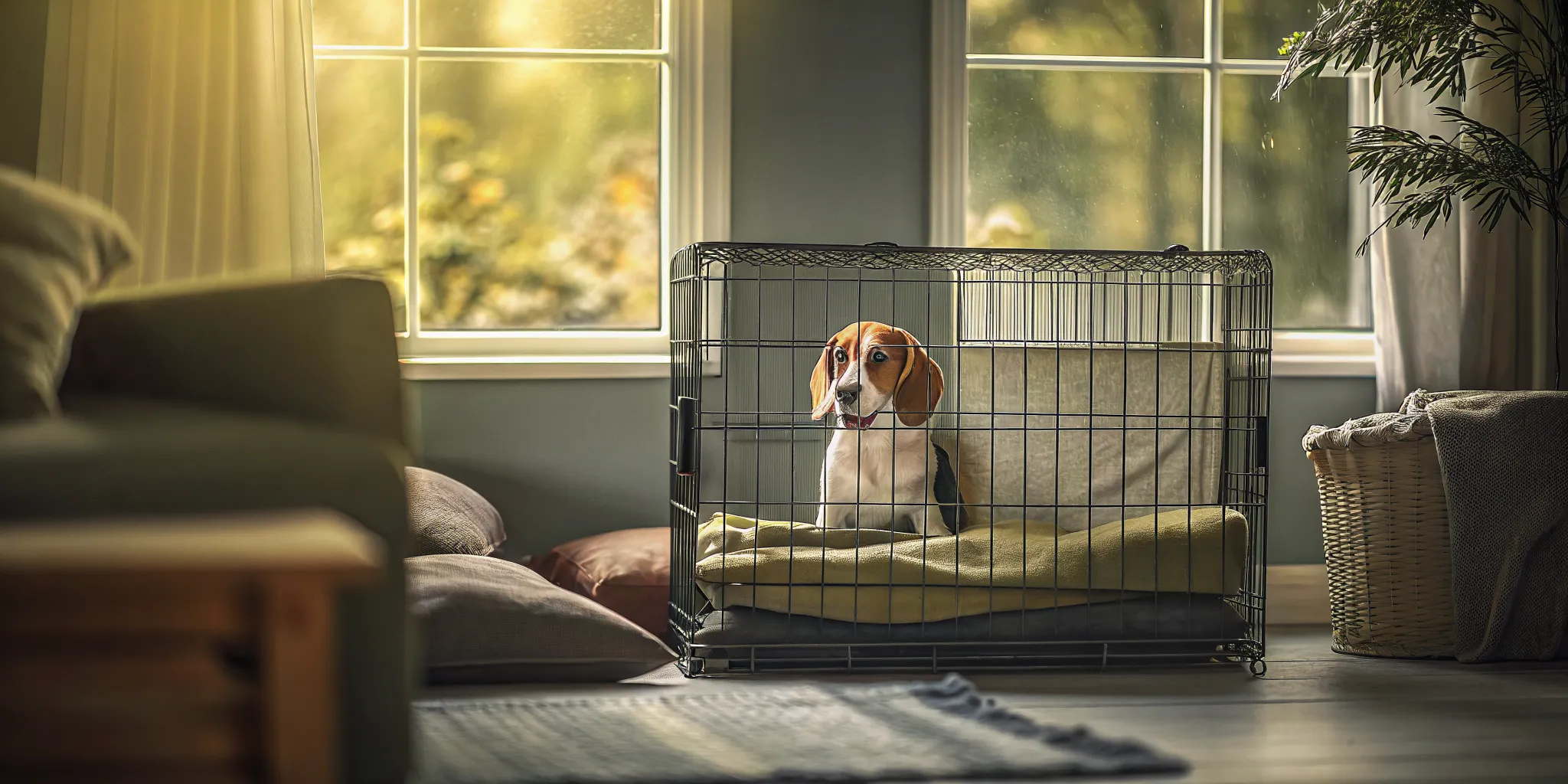
For the first few weeks, keep the crate in your bedroom near your bed. Puppies are naturally social animals and can panic if isolated in a remote room. Hearing and smelling your presence provides comfort, lowering their fear. This also allows you to respond promptly to genuine middle-of-the-night potty needs. If your puppy is anxious, place the crate on a sturdy chair next to your bed so they can see you.
Create a Cozy, Den-Like Space
A crate should feel like a safe, private retreat. The American Kennel Club suggests that covering a wire crate with a light blanket or sheet can make it feel cozier. Cover the top and sides while leaving the front open for ventilation. This turns the crate into a secure den without visual distractions. Position the crate away from extreme temperature zones like drafty windows or vents.
Prioritize Safety and Comfort
Safety is key when setting up your puppy’s crate. Always remove your puppy’s collar or harness before placing them inside. Collars can catch on the wire mesh, posing a severe hazard. Keep the interior safe and free of any loose objects. You can place a soft crate pad inside to increase comfort, but avoid soft plush toys if your puppy has a habit of chewing and swallowing fabric.
Age-Appropriate Overnight Expectations: What is Realistic?
Many new owners begin crate training a puppy expecting a full eight hours of sleep right away. However, young puppies have small, developing bladders and physically cannot hold their urine all night. Setting realistic expectations prevents frustration for both you and your puppy.
Understanding Bladder Capacity
A general rule of thumb for a puppy’s daytime bladder control is one hour for every month of age, plus one. Overnight, they can usually hold it slightly longer because their metabolism slows down, but a 2-month-old puppy still typically needs at least one midnight potty break. Expecting too much too soon leads to avoidable accidents and training setbacks.
| Puppy Age | Overnight Bladder Capacity | Potty Break Frequency |
|---|---|---|
| 8 to 12 Weeks | 3 to 4 hours | 1 to 2 breaks per night |
| 12 to 16 Weeks | 4 to 6 hours | 1 break or sleeping through |
| 16 Weeks and Older | 6 to 8 hours | Typically sleeping through |
When Will Your Puppy Sleep Through the Night?
Most puppies begin sleeping through the night consistently around 12 to 16 weeks of age, provided a solid routine is in place. The first 30 days of puppy training are critical for establishing these expectations. By responding only to genuine potty needs and keeping midnight trips boring, you teach your puppy that nighttime is for resting. Tim Medina and his team emphasize that setting realistic boundaries early prevents sleeping issues from persisting into adulthood.
How to Crate Train a Puppy at Night: Managing Crying and Anxiety
Learning how to crate train a puppy at night is often a major test of patience. The first few nights are typically the most challenging for any household in the San Francisco Bay Area. It is entirely normal for a young puppy to whine or cry when first placed in their crate. They are adjusting to a brand-new home, new smells, and being separated from their mother and littermates for the first time.
Distinguishing Potty Needs from Attention Crying
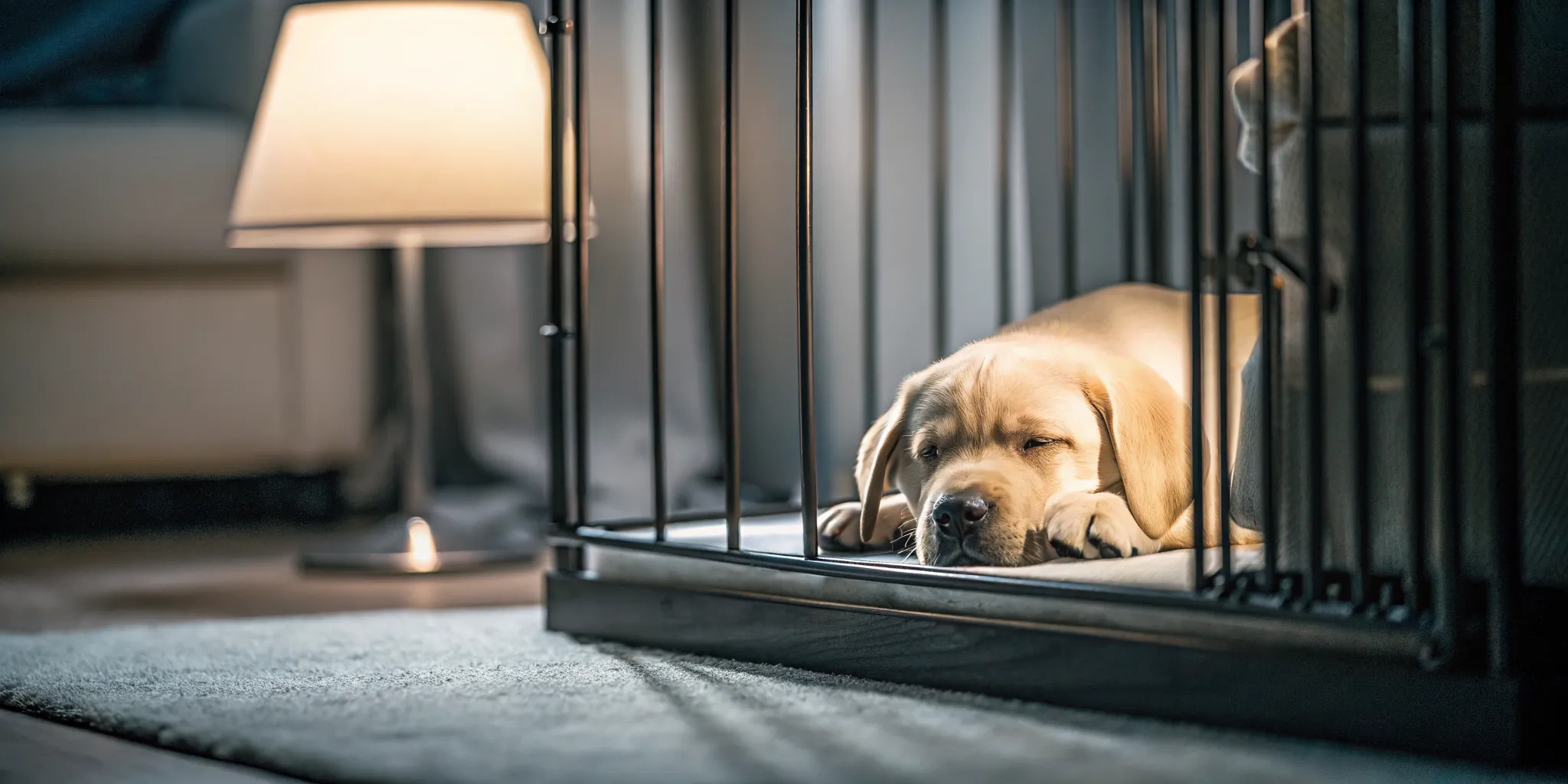
To succeed, you must tell the difference between a puppy who needs to eliminate and one demanding your attention. A puppy who needs a potty break will often sleep quietly first, then wake up and show restlessness by circling before whining. If they have been asleep for several hours, a sudden whine is a clear indicator of a physical need. In contrast, a puppy who begins crying the moment you close the door is seeking attention. If you immediately open the door when they cry, you teach them that vocalizing works. Instead, wait for a brief pause of silence before opening the crate, rewarding calm behavior.
Keeping Midnight Potty Trips “Strictly Business”
When taking your puppy out at night, keep the interaction strictly business. Do not turn on bright lights, speak excitedly, or offer play. Carry your puppy directly to their designated potty spot, use a quiet cue, and wait for them to eliminate. Once they finish, give a quiet word of praise and carry them back to the crate. Taking them out the moment they wake up prevents accidents, teaching them that nighttime trips are for elimination, not play.
Common Mistakes to Avoid with Nighttime Crate Training
The most common nighttime crate training mistakes include using the crate as a place of punishment. Leaving a collar or harness on your puppy inside the crate, and letting them panic or cry frantically without reassurance, which can cause severe isolation distress.
When learning how to crate train a puppy at night, avoid forcing your puppy inside when they are anxious. Forcing them in creates a negative association, making bedtime a source of fear. Instead, use patience, treats, and positive reinforcement to help them enter voluntarily.
Never Use the Crate for Punishment
A crate should only represent comfort and security. Never use the crate as a “time-out” spot or a place of punishment when your puppy makes a mistake. If your puppy associates the crate with anger or isolation, they will dread entering it at bedtime. This boundary is crucial for maintaining a positive, stress-free relationship with their sleeping space.
Do Not Let Them “Cry It Out” in a Panic
While ignoring minor attention-seeking whines is necessary, never let your puppy engage in prolonged, frantic crying or panic. Allowing a puppy to scream or hyperventilate inside a crate can lead to severe separation anxiety and long-term trauma. If your puppy is panicking, the training is moving too fast. Move the crate closer to your bed, offer reassurance, and focus on building positive associations during the day.
When Professional Puppy Training Can Help
Crate training doesn’t have to become weeks of sleepless nights. If you’re struggling despite following a consistent routine, professional guidance can help your puppy settle much faster. A professional trainer can establish a solid behavioral foundation, saving you weeks of frustration and sleepless nights.
Comprehensive Board and Train Programs
Medina Dogs Training offers premium puppy board and train programs designed for busy professionals and families. Serving the East Bay, Silicon Valley, and the Sacramento area, our programs place your puppy in a structured home environment. This home-based training ensures your puppy learns real-world house manners, including reliable crate behavior and bedtime routines.
Establishing Routine and Structure
A professional puppy training schedule is key for long-term success. Experienced trainers balance exercise, mental stimulation, potty breaks, and crate time to prevent bad habits. Our puppy programs focus on building confidence, preventing separation anxiety, and ensuring your pup views their crate as a safe den.
Empowering Owners for Long-Term Success
The most important part of any puppy program is the transition back to the owner. We focus heavily on owner education, providing you with the exact tools and routines needed to maintain your puppy’s behaviors at home. This ensures a smooth, confident transition and a lifetime of harmonious living.
Frequently Asked Questions
Where is the best place to put the crate at night?
For a new puppy, the best place to put the crate at night is in your bedroom, close to your bed. This placement provides critical emotional comfort, reduces separation anxiety, and allows you to easily hear and respond to genuine midnight potty needs. As your puppy builds confidence and consistently sleeps through the night, you can gradually transition the crate to a permanent location in your home.
How many nights will my puppy whine in the crate?
Most puppies stop whining after three to five nights of consistent crate training, provided they have a solid evening routine. Staying consistent during the first 30 to 60 days is crucial, as noted by Medina Dogs Training. If the whining persists for weeks, it may indicate that the training is moving too fast, or your puppy is experiencing separation anxiety, which may require professional guidance.
Should I ignore my puppy if they bark at night in the crate?
You should not always ignore a barking puppy. While you should ignore minor attention-seeking whines, a sudden bark after several hours of sleep usually indicates a physical need to potty. In these cases, carry them out on a leash for a boring, business-only potty trip. If they do not go within a few minutes, place them back in the crate and ignore further attention-seeking barking.
How do I know if my puppy needs to potty or just wants attention at night?
A puppy who needs a potty break will usually sleep quietly first, then wake up and show restlessness by circling or scratching before whining. If they have been asleep for several hours, it is almost certainly a physical need. If they whine the instant you close the door and walk away, they are seeking attention. Keeping midnight trips short, dark, and boring teaches them that the night is exclusively for sleep.
What should the bedtime routine be for crate training a puppy?
A successful bedtime routine starts by removing food and water bowls two hours before bed. This simple tip helps prevent midnight potty breaks. Take your puppy out for a final potty trip immediately before placing them in the crate. Keep the household lights dim and noise levels low to signal that the day has ended. Guide them into the crate with a quiet cue and a small treat to build positive bedtime habits.
Ready to schedule a free puppy training consultation?
Living with a puppy that cries all night can drain your energy and make daily life in Northern California a struggle. Ignoring early crate training challenges can allow minor issues to develop into deep-seated behavioral habits that are much harder to correct. You do not have to endure sleepless nights. Investing in a professional puppy training program ensures your dog learns to feel secure, calm, and confident. Our expert local trainers specialize in turning chaotic bedtimes into quiet, peaceful nights for families throughout the East Bay and Silicon Valley. Reach out today to establish a clear path forward and begin building a joyful relationship with your new puppy.
Ready to get started? Call (510) 916-2424 to schedule your free consultation with Medina Dogs Training.

Tim Medina is the founder and Training Director of Medina Dogs Training, specializing in real-world obedience and behavior modification for dogs of all ages and temperaments. With more than 14 years of hands-on dog training experience, Tim brings a rare combination of practical training expertise and executive-level leadership, delivering structured, results-driven programs designed for real-world reliability.
He helps dog owners solve serious behavior challenges including aggression, reactivity, leash pulling, and lack of recall through structured, results-driven board-and-train programs. Tim also serves as a Advanced Nose Work instructor at the Marin Humane Society, bringing institutional credibility and community trust to his work.
Tim works with clients in Fremont, Stockton, Sacramento, and surrounding Northern California areas, including the East Bay, Silicon Valley, and the greater San Jose region.

