

Choosing a board and train program is not just about who teaches your dog. It is also about where your dog learns. A home based board and train places your dog in a real home with daily routines, normal household sounds, and the kind of structure your dog will need after training.
Schedule a free consultation with Medina Dogs Training to talk through whether a real-home program fits your dog.
That matters for busy Northern California owners who want behavior that carries into everyday life. Kennel programs can help some dogs, but the setting can make transfer harder if the dog mostly practices in a facility. Here is how the two models compare before you choose.
Home Based Board and Train vs Kennel Programs
A kennel board and train typically takes place in a training facility, while a home based board and train places the dog in a real household environment where daily routines become part of the training process.
The main difference is context
Dogs often connect a skill to the place, person, and routine where they learned it. The American Kennel Club explains that dogs do not automatically generalize behavior, so a dog may understand a command in one room but not in another place. That is why the training site matters.
In a home, a dog can practice waiting at doors, settling near people, walking from the house, and staying calm when life is moving around them. In a kennel, a dog may learn useful skills in a louder setting that does not look much like the owner’s home.
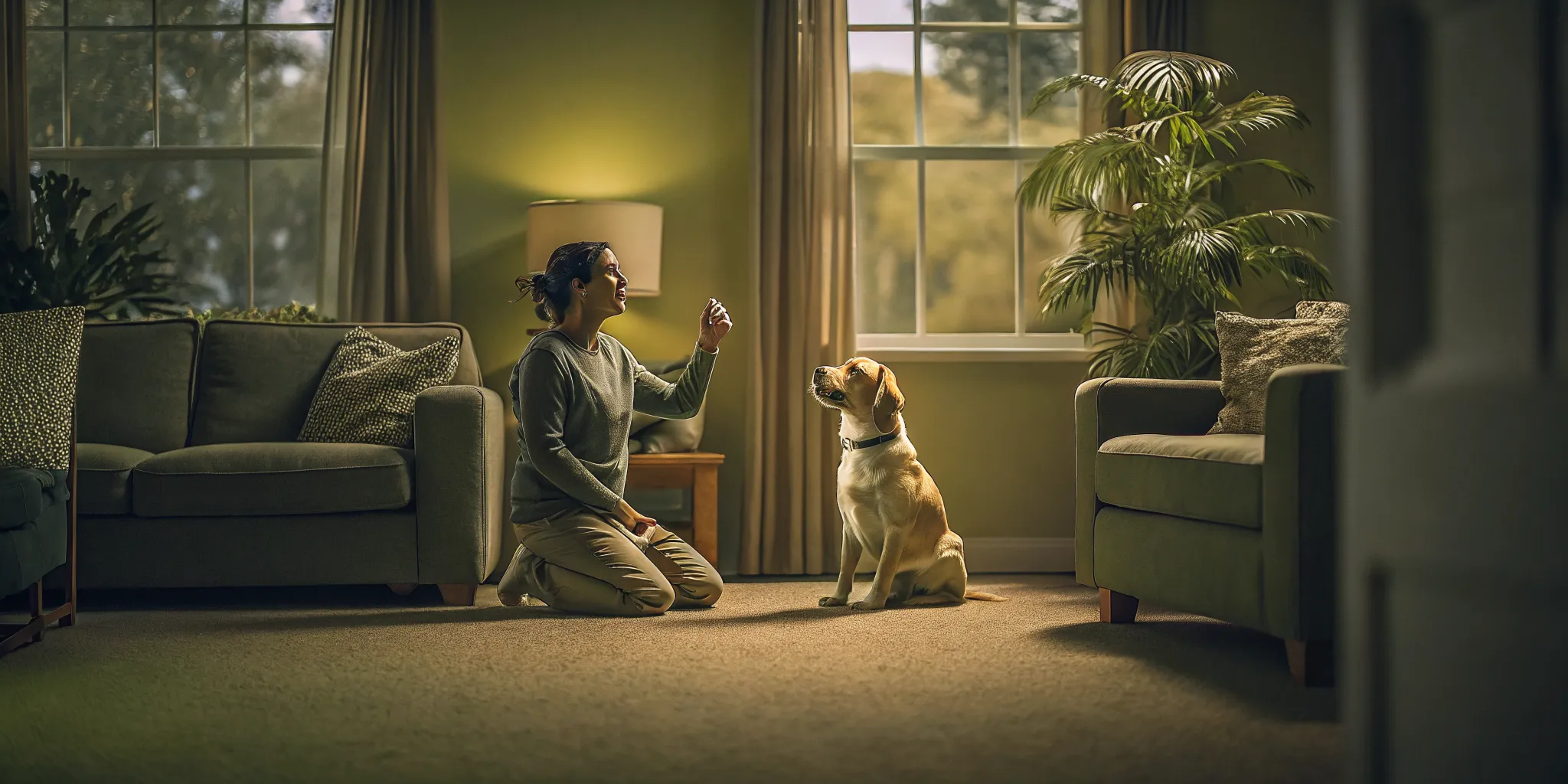
What Does a Home-Based Board and Train Look Like?
A true home-based program uses normal daily life as part of the training plan. Your dog does not just work during a short lesson. They practice clear rules during meals, rest, walks, door greetings, and quiet time.
Common goals may include leash manners, place work, impulse control, recall, calm crate habits, and better choices around guests. The trainer can see how the dog acts when the doorbell rings, when food is present, or when the house is active.
How Does the Setting Affect Real-World Behavior?
The setting affects how easily training transfers. A dog that practices calm door manners, leash starts, and place work inside a home is already rehearsing the moments that usually cause problems for owners.
A facility can still teach useful obedience, but owners should ask how the program bridges the gap from the training room to the living room. Without that bridge, a dog can look good with the trainer and slide back when routines, people, and distractions change.
No board and train replaces the owner’s role. Medina Dogs Training focuses on owner education so clients understand how to maintain the work once the dog comes home. Clear follow-up, simple handling steps, and realistic practice help the new habits last.
For a broader decision guide, read Medina Dogs Training’s article on whether board and train is worth it.
Home-Based and Kennel Board and Train Comparison
Both models can teach skills, but they are not the same experience for the dog. Use this table to compare what each setting usually emphasizes.
| Factor | Home-based board and train | Kennel-style program |
|---|---|---|
| Learning setting | Real house, daily routines, normal household activity. | Facility rooms, kennel runs, and structured training areas. |
| Real-world practice | Skills can be built around doors, guests, walks, meals, and rest. | Skills may need more transfer work after the dog goes home. |
| Stress level | Often calmer for dogs who need a home-like routine. | May be harder for some dogs due to noise and many dogs nearby. |
| Owner transition | Should include clear coaching so results move back into the home. | Should explain how facility skills will carry into daily life. |
The best choice depends on your dog, your goals, and the support offered after the program. For many family dogs, a real-home model gives the trainer a better view of the behaviors owners actually need to solve.
Review the Adolescent and Adult Board and Train program if your dog needs more structure with leash manners, recall, or household behavior.
What Questions Should You Ask Before Choosing?
Before you enroll, ask direct questions. A good trainer should be able to explain where your dog will stay, how each day is structured, and what happens when your dog comes home.
Use these questions as a guide
- Where will my dog live during the program? Ask if the dog stays in the main home or in a kennel area.
- What real-life skills will my dog practice? Look for work around doors, walks, guests, calm rest, and daily manners.
- How are behavior goals set? The plan should match your dog’s needs, not a one-size program.
- How much owner coaching is included? You need to know how to keep the behavior going.
- What is the transition plan? Ask what the first week home should look like.
If your dog is younger, compare the goals on the Puppy Board and Train program. If fear, reactivity, or more serious patterns are involved, review Behavior Modification before choosing a standard program.
When Is a Home-Based Program the Better Fit?
A home-based program is often a strong fit when the main problem happens in normal life. If your dog jumps on guests, pulls through the neighborhood, barks at household sounds, or struggles to settle, the trainer needs to see those patterns in a real setting.
Some dogs know basic commands but still struggle with everyday behaviors like rushing doors, jumping on guests, or settling in the house. A home environment allows those issues to be addressed where they actually occur.
The best program should also leave the owner with a plan they can follow. Ask for simple rules, practice steps, and support after the dog returns home. A home based board and train should make the move home easier, not leave you guessing.
Frequently Asked Questions
What is a home-based board and train program?
It is a residency training program where your dog lives and trains in a real home with a trainer instead of spending most of the program in a kennel or facility setting.
Is home-based board and train better than a facility program?
It can be a better fit for dogs who need real-life practice, household manners, and help transferring skills back home. The right choice depends on your dog’s needs and the program’s follow-up support.
What happens after a board and train program ends?
The owner must learn how to maintain the new rules. A strong program includes owner coaching, a clear transition plan, and simple practice steps for the first weeks at home.
Ready to Compare the Right Training Setting?
If you are deciding between a home-based program and a kennel-style option, start with your dog’s daily life. The right program should help your dog learn skills that make sense at home, on walks, and around your family.
For owners dealing with leash pulling, jumping, poor recall, or a lack of structure, a free consultation is a simple next step.
Schedule a free consultation with Medina Dogs Training

Tim Medina is the founder and Training Director of Medina Dogs Training, specializing in real-world obedience and behavior modification for dogs of all ages and temperaments. With more than 14 years of hands-on dog training experience, Tim brings a rare combination of practical training expertise and executive-level leadership, delivering structured, results-driven programs designed for real-world reliability.
He helps dog owners solve serious behavior challenges including aggression, reactivity, leash pulling, and lack of recall through structured, results-driven board-and-train programs. Tim also serves as a Advanced Nose Work instructor at the Marin Humane Society, bringing institutional credibility and community trust to his work.
Tim works with clients in Fremont, Stockton, Sacramento, and surrounding Northern California areas, including the East Bay, Silicon Valley, and the greater San Jose region.

