

That feeling of dread before a walk—the constant scanning for other dogs, the tight grip on the leash, and the inevitable explosion of barking and lunging. If this sounds familiar, you know how stressful and isolating living with a reactive dog can be. You’ve probably tried different things, but the core problem remains, leaving you feeling exhausted and defeated. This is where an immersive program can create a true breakthrough. A professional dog board and train for leash reactivity provides the 24/7 consistency and expert guidance that’s nearly impossible to replicate at home. It’s designed to break the cycle of reactivity and build a new foundation of confidence for both you and your dog.
Ready to transform your stressful walks into peaceful strolls? Contact us today to learn more about our highly successful board and train program!
Key Takeaways
- Understand the Emotion Behind the Reaction: Leash reactivity is typically driven by fear or frustration, not aggression. Realizing this helps you shift from trying to correct the behavior to building your dog’s confidence, which is the foundation for lasting change.
- Immersive Training Provides a Necessary Reset: A board and train program works by removing your dog from daily triggers and providing 24/7 professional guidance. This structured reset allows an expert to efficiently build new, calm behaviors in real-world settings.
- Your Follow-Through Makes the Training Stick: The trainer’s work is only half the equation; long-term success depends on your ability to maintain the structure at home. A quality program prioritizes owner education, giving you the skills to be the confident leader your dog needs.
What Is Leash Reactivity and Why Does It Occur?
Many owners mistakenly believe leash reactivity is simply disobedience. In reality, most reactive dogs are experiencing fear, frustration, or uncertainty. Understanding the emotional cause behind the behavior makes it much easier to choose training methods that produce lasting results instead of temporary suppression.
If your daily walk feels more like a wrestling match than a relaxing stroll, you might be dealing with leash reactivity. Simply put, leash reactivity is when a dog has a big, over-the-top reaction to seeing certain things while on a leash. Instead of calmly walking past another dog, a stranger, or a skateboarder, a reactive dog might bark, lunge, growl, and pull frantically. It’s stressful for you and overwhelming for your dog, turning what should be an enjoyable activity into a source of anxiety.
These outbursts aren’t a sign of a “bad dog.” They’re an outward display of internal turmoil. Your dog is feeling something intense, like fear, frustration, or over-excitement, and doesn’t know how to handle those big emotions in that moment. The leash itself can add to the problem by making your dog feel trapped and unable to create space, which can heighten their reaction. Understanding the root cause is the first step toward changing the behavior. Our behavior modification programs focus on teaching dogs how to feel confident and calm in the real world, so you can finally have the peaceful walks you’ve been dreaming of.
Recognizing the Signs and Triggers
A reactive episode is hard to miss, but the signs often start subtly before the full-blown explosion of barking and lunging. You might first notice your dog’s body stiffening, their ears perking up, or a low growl. They might stare intently at the trigger, freeze in place, or start whining. These are all signals that your dog is becoming uncomfortable.
Learning to recognize these early warning signs allows you to interrupt the cycle before your dog reaches the point of barking or lunging. The earlier you respond, the easier it becomes to help your dog remain calm and engaged with you.
Common triggers include other dogs, strangers, people wearing hats or carrying umbrellas, strollers, bicycles, and cars. The key is to become a detective and identify what specifically sets your dog off. Does it only happen with big, fluffy dogs? Is it men but not women? The more you understand your dog’s specific triggers, the better you can manage situations and start a training plan that addresses the core issue.
Reactivity vs. Aggression: Crucial Differences
One of the biggest worries for owners of reactive dogs is, “Is my dog aggressive?” It’s a valid concern, but it’s important to know that reactivity and aggression are not the same thing. Aggression is behavior with the intent to cause harm. Reactivity, on the other hand, is most often a fear-based response. Your dog is essentially shouting, “Go away! You’re scaring me!” They are trying to create distance, not pick a fight.
Think of it this way: a reactive dog is like someone who is terrified of spiders and screams when they see one. They aren’t trying to hurt the spider; they’re just having a huge, panicked reaction. Understanding this difference is crucial because it changes everything about how we approach training. We don’t need to punish the fear out of them. Instead, we need to build their confidence and change their emotional response, which is a core part of our adolescent and adult board and train programs.
Is a Board and Train Program Effective for Leash Reactivity?
Board and train programs are especially valuable for leash reactivity because they provide hundreds of controlled training repetitions in a relatively short period. Instead of practicing unwanted behavior every day, your dog learns consistent responses under professional guidance.
Living with a reactive dog can be stressful and isolating. You might feel embarrassed by outbursts or anxious about every walk. A board and train program addresses this by removing your dog from the stressful environment and immersing them in a structured, 24/7 learning experience. A professional trainer works to change your dog’s emotional response to triggers and build new, calmer behaviors. The process focuses on creating a confident, reliable dog by combining intensive training, real-world practice, and, most importantly, teaching you how to maintain the results once your dog is back home.
A Day in the Life: Structure and Real-World Practice
In a board and train program, your dog’s day is carefully structured to promote learning and reduce stress. Instead of spending their days in a reactive state, they follow a routine of training sessions, structured socialization, and crucial downtime. This consistency helps them feel secure and ready to learn. The training doesn’t just happen in a sterile room; it happens out in the real world. Trainers create controlled setups in parks, on neighborhood streets, and in other public spaces. This approach allows them to work on your dog’s behavior modification in the very environments where the reactivity occurs, ensuring the new skills hold up in your everyday life.
Key Techniques for Building Your Dog’s Confidence
The goal of reactivity training isn’t to punish the barking and lunging but to change how your dog feels about their triggers. Trainers use a technique called counterconditioning and desensitization to slowly build positive associations. By pairing the sight of another dog with something your dog loves, like a high-value treat, they learn that the trigger predicts good things. At the same time, trainers teach your dog what to do instead of reacting. They might teach them to look at you, sit calmly, or create distance. This gives your dog a clear, confident action to take, replacing uncertainty and fear with a predictable, rewarding choice.
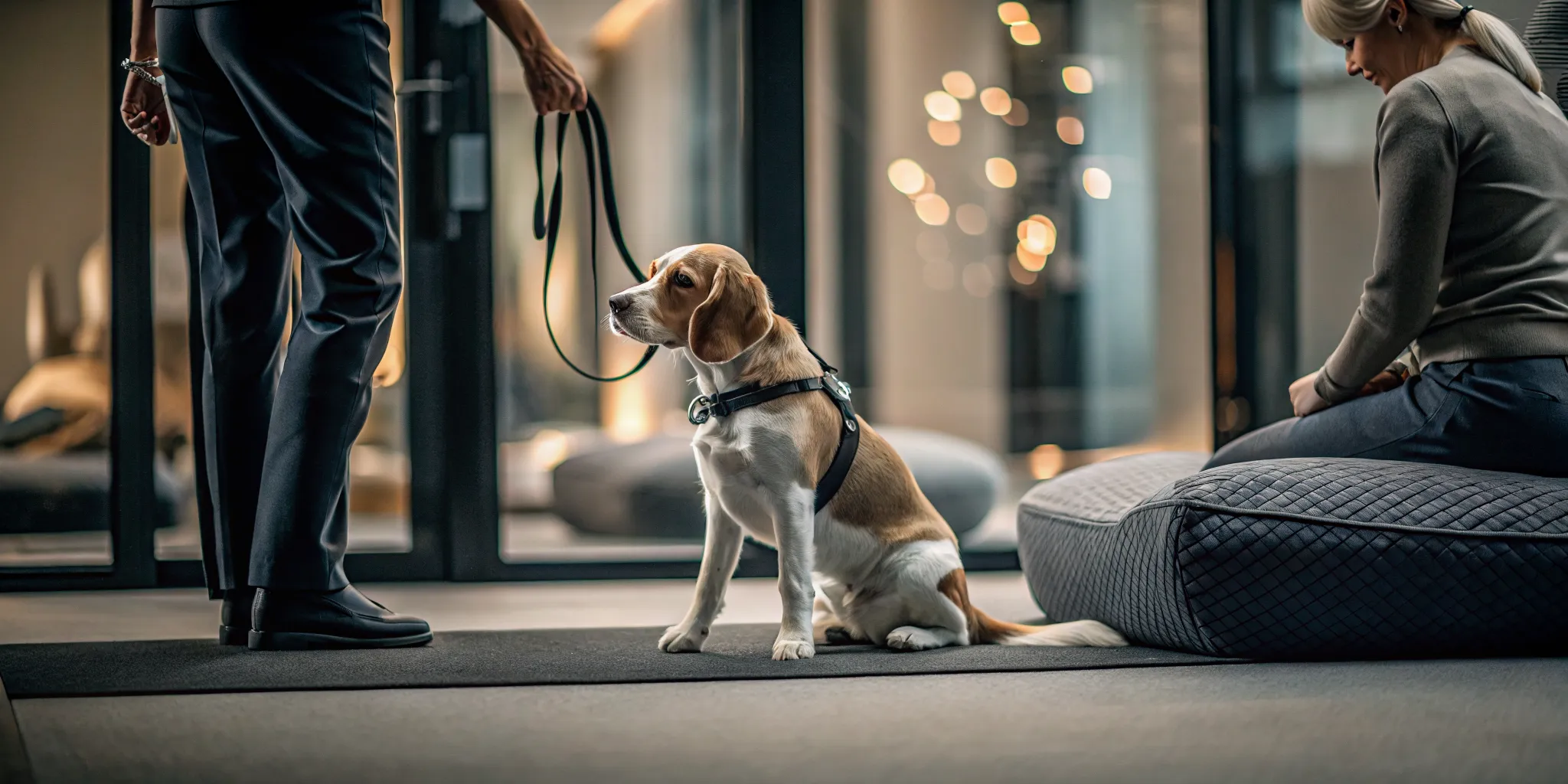
Your Role in Maintaining Long-Term Success
A board and train program is not a magic wand. The most critical part of the process happens when your dog comes home. Dogs don’t automatically transfer their new skills to their owners; you need to learn the system, too. Reputable programs include several private lessons to hand off the training to you. During these sessions, the trainer will teach you the new cues, handling skills, and management strategies your dog has learned. Your consistency is what makes the training stick for the long haul. These comprehensive board and train programs are designed to empower you with the knowledge and confidence to become the leader your dog needs.
When Is Board and Train the Right Choice?
Board and train is often the best option for owners whose dogs react strongly on nearly every walk, whose schedules make consistent daily training difficult, or who simply want experienced professionals to establish a solid behavioral foundation before transitioning the training back home.
How Do I Choose the Right Program for Leash Reactivity?
Deciding on a board and train program for your reactive dog is a big step. It’s an investment of trust, time, and dedication, and you want to be sure you’re making the right choice. While these immersive programs can create incredible transformations, they aren’t a quick fix. The success of a board and train depends heavily on the quality of the program and your commitment to follow-through.
Not every reactive dog requires board and train, but dogs with frequent, intense reactions often benefit from the consistency and structure that are difficult for most owners to provide on their own.
Evaluative Criteria:
- Evaluate Their Credentials and Philosophy: A trainer’s philosophy dictates how they communicate with dogs, correct behavior, and build new skills. Look for a program that focuses on building your dog’s confidence with humane and effective methods, creating change that lasts because your dog feels safe.
- Understand the Methods: A great trainer will be transparent about the tools and techniques they use. They should focus on teaching the dog what to do in a way it can understand, rather than just suppressing unwanted behaviors.
- A Safe, Low-Stress Training Environment: A reactive dog is already under stress. Standard boarding kennels with constant barking can be overwhelming. The right program will provide a calm, structured, and low-stress setting.
- Owner Handoff & Ongoing Support: The best programs place a strong emphasis on owner education, providing detailed handoff sessions and follow-up support to ensure the results stick for the long haul.
Frequently Asked Questions
Will my dog be completely cured of reactivity? The goal of a high-quality program is not to “cure” reactivity like a disease, but to teach your dog excellent coping mechanisms and neutrality around triggers. A realistic outcome is a dog who can walk calmly past other dogs on a leash without lunging or barking, giving you the management tools to handle real-world scenarios confidently.
What is the training methodology used for reactive dogs? We use balanced, clear, and humane communication tailored to your dog’s specific needs. We focus heavily on positive reinforcement to build engagement and trust, while also introducing fair, understandable boundaries so your dog feels secure.
How do you handle transitions back to the home environment? We conduct structured go-home sessions where you practice handling your dog under our direct supervision. We also include follow-up support to guide you through the initial adjustment period and troubleshoot any issues that arise.
If you are struggling with a reactive dog and feel like walks have become a chore, let our dedicated local team guide you and your dog toward a peaceful, stress-free future. Contact us today to discuss your dog’s specific needs.
At Medina Dogs Training, we specialize in helping reactive dogs throughout the Bay Area and Sacramento develop calm, confident behavior through structured board and train programs combined with comprehensive owner coaching that ensures lasting success at home.

Tim Medina is the founder and Training Director of Medina Dogs Training, specializing in real-world obedience and behavior modification for dogs of all ages and temperaments. With more than 14 years of hands-on dog training experience, Tim brings a rare combination of practical training expertise and executive-level leadership, delivering structured, results-driven programs designed for real-world reliability.
He helps dog owners solve serious behavior challenges including aggression, reactivity, leash pulling, and lack of recall through structured, results-driven board-and-train programs. Tim also serves as a Advanced Nose Work instructor at the Marin Humane Society, bringing institutional credibility and community trust to his work.
Tim works with clients in Fremont, Stockton, Sacramento, and surrounding Northern California areas, including the East Bay, Silicon Valley, and the greater San Jose region.

