

Board and train cost in California varies based on your dog’s age, behavior goals, program length, and the level of support included. Comparing the full training plan—not just the price—helps you choose the right fit for your dog and family.
Schedule a free consultation to discuss the right training plan for your dog.
In California, board and train cost is shaped by program length, behavior goals, daily trainer involvement, care, owner lessons, and follow-up. Compare the full plan rather than price alone. A useful quote clearly explains what your dog will practice and how you will maintain progress at home.
What determines board and train cost?
The biggest cost drivers are your dog’s needs, the time required to reach practical goals, the level of daily care, and the support included after pickup. Programs for basic manners usually require a different plan than programs addressing reactivity, fear, or unsafe behavior.
Program length and goals
A puppy learning structure may need a different plan than an adult dog with years of practiced habits. Loose-leash walking, recall, calm greetings, and behavior concerns each require different amounts of repetition and coaching.
The right stay is not simply the longest option. It should give the trainer enough time to build reliable skills without promising a fixed result. If you are comparing options for a young dog, review what a dedicated puppy board and train program includes.
Daily care and training environment
Ask how much direct training your dog receives each day and what happens between sessions. Feeding, rest, exercise, safe handling, and supervised practice are all part of the work.
Training environments matter. Programs that include real-world practice around people, dogs, neighborhoods, and everyday distractions often require more planning and trainer involvement than training in a single controlled setting.
Owner transfer and follow-up
Your dog can learn skills during a stay, but you still need to maintain them. Medina Dogs Training emphasizes owner education because clear handoff lessons and follow-up help new behavior transfer into the home. Learn more about Tim Medina and the training team.
How should you compare board and train programs?
Compare written quotes line by line. Confirm the training goals, stay length, daily environment, owner lessons, equipment, progress updates, and follow-up support. Then ask how the program prepares your dog for the routines and distractions that matter in your household.
Start with the full quote
A lower board and train cost may cover fewer services or little help after pickup. Ask every trainer for a clear written quote, then use the same questions for each program.
| Comparison point | What to ask | A clear answer includes |
|---|---|---|
| Program scope | What goals are included? | Specific priorities for your dog |
| Daily practice | Where will my dog train? | Relevant home and public settings |
| Owner education | How will I learn the system? | Hands-on lessons and guidance |
| Follow-up | What happens after pickup? | Defined support and next steps |
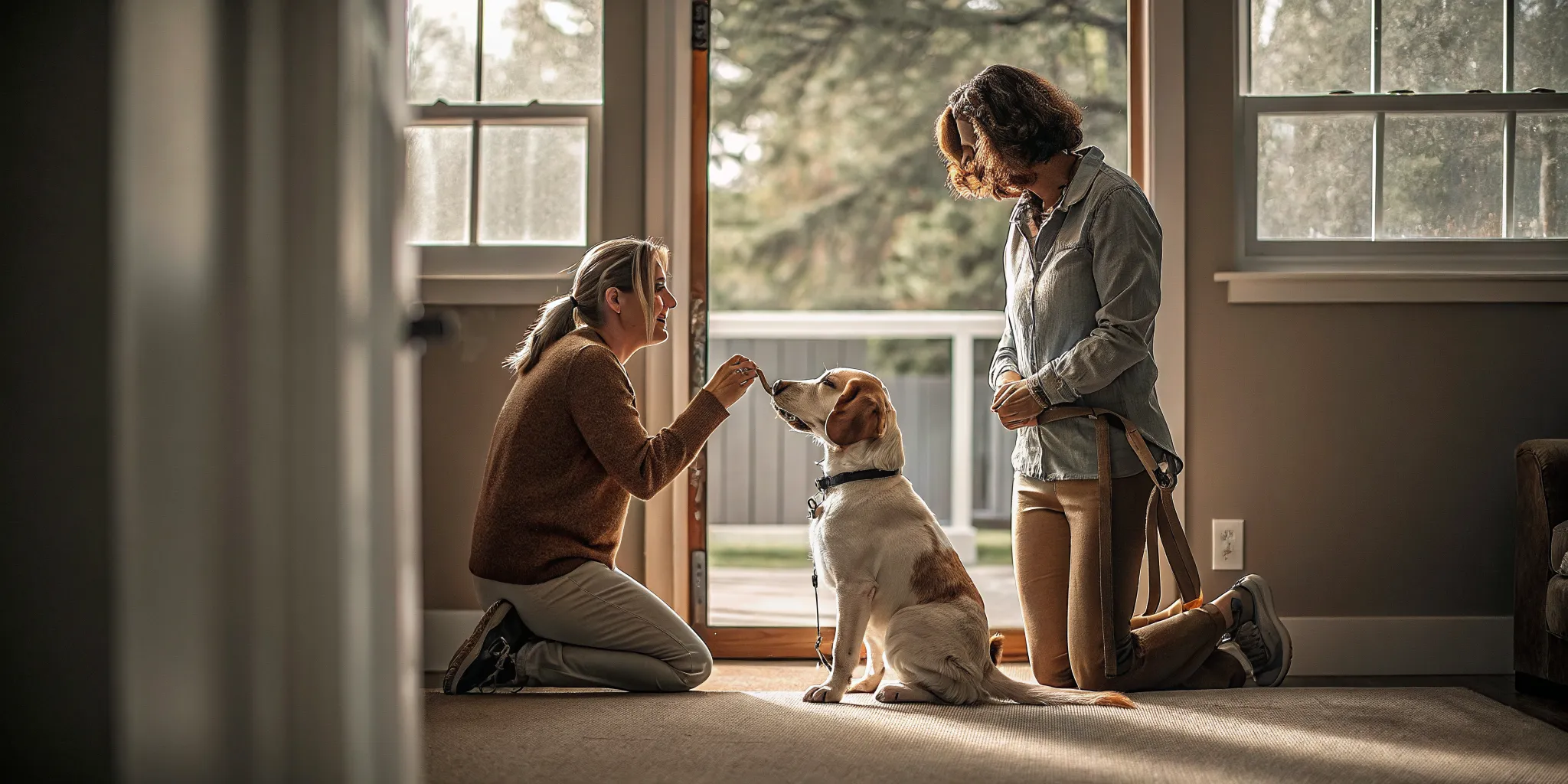
Match the program to your dog
Ask how the plan changes for age, temperament, and behavior. An adolescent or adult board and train program should address the dog’s current habits and the situations your family faces. Dogs with more serious challenges may need a dedicated behavior modification plan.
Ask for clear expectations
A trustworthy trainer should explain what the program can address, what may take longer, and what work continues after pickup. Avoid anyone promising a perfect dog or a guaranteed result.
What should happen after your dog comes home?
After pickup, the trainer should teach you how to use the same cues, routines, and boundaries your dog learned during the stay. Your household then practices those skills in everyday situations, increases distractions gradually, and contacts the trainer when a pattern begins to slip.
Use a clear handoff plan
The trainer should explain what your dog learned and coach you through each key skill. Practice walks, place work, greetings, recall, and calm time together. Ask what routine to follow and how to respond to mistakes.
Medina Dogs Training works in real-home environments and focuses on transferring results to owners. Its frequently asked questions explain more about program length, owner involvement, and the training process.
Practice in everyday life
- Use the same cues and rules each day.
- Practice in short, consistent sessions.
- Increase distractions gradually.
- Ask for help before setbacks become habits.
A dog that listens with a trainer still needs practice with you. Consistent follow-through protects the progress made during the program and helps reliable behavior become part of daily life.
Talk with Medina Dogs Training about your goals, the proposed plan, and follow-up support.
Is board and train the right investment for your dog?
Board and train may be a sound investment when your dog needs focused daily practice and your family needs a practical system to continue at home. The best fit aligns the training plan, owner coaching, and follow-up with the behaviors that affect your daily life. Review whether board and train is worth it before deciding.
A practical decision process
- Define your goals. Name the behaviors that affect daily life most, such as leash pulling, poor recall, jumping, or reactivity.
- Describe your routine. Share where your dog struggles, who handles the dog, and what your household can maintain.
- Confirm the handoff. Ask how the trainer will teach you the cues, boundaries, and routines.
- Review the full plan. Compare daily care, progress updates, owner lessons, follow-up, and total cost.
Frequently Asked Questions
How much does board and train cost in California?
Pricing varies by program length, location, goals, daily care, and the support a dog needs. Ask each provider for a written quote covering the stay, training plan, owner lessons, and follow-up. Medina Dogs Training discusses custom pricing during a consultation rather than publishing a one-size-fits-all price.
What factors affect the cost of a board and train program?
The main factors are stay length, behavior goals, trainer involvement, training environment, care, owner education, and follow-up. Reactivity, fear, or unsafe behavior can require more time and individualized planning than basic manners.
Is board and train worth the cost for every dog?
No. It can be useful when a dog needs focused daily practice and the owner will continue the system at home. A consultation helps determine whether board and train or another service fits the dog’s needs.
Does board and train cost include follow-up training?
It depends on the provider. Before enrolling, confirm how many owner lessons are included, when they happen, what follow-up is available, and whether later support costs extra.
Take the next step with a clear plan
If you are comparing board and train cost for your dog, a free consultation is a simple next step. Discuss your dog’s behavior, your goals, what the program includes, and how results will transfer home.

Tim Medina is the founder and Training Director of Medina Dogs Training, specializing in real-world obedience and behavior modification for dogs of all ages and temperaments. With more than 14 years of hands-on dog training experience, Tim brings a rare combination of practical training expertise and executive-level leadership, delivering structured, results-driven programs designed for real-world reliability.
He helps dog owners solve serious behavior challenges including aggression, reactivity, leash pulling, and lack of recall through structured, results-driven board-and-train programs. Tim also serves as a Advanced Nose Work instructor at the Marin Humane Society, bringing institutional credibility and community trust to his work.
Tim works with clients in Fremont, Stockton, Sacramento, and surrounding Northern California areas, including the East Bay, Silicon Valley, and the greater San Jose region.

